What is Commodity Fumigation?
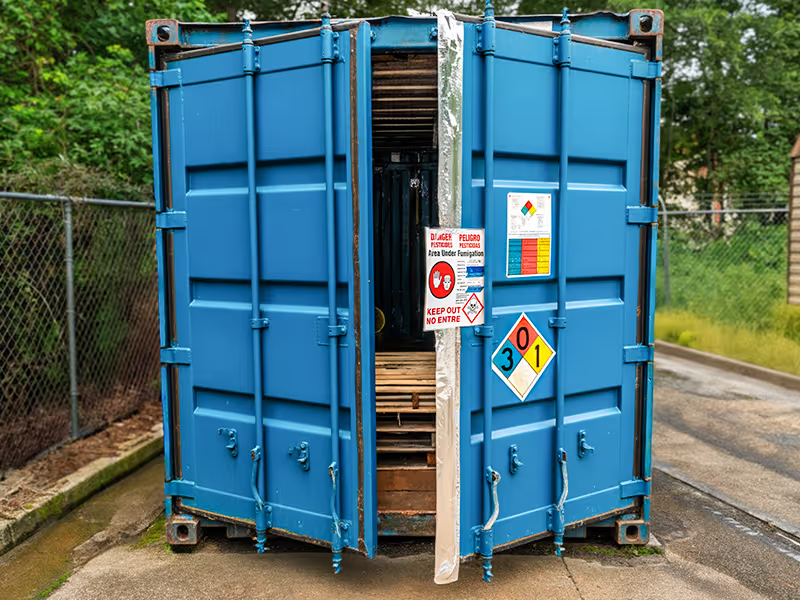
Commodity fumigation is the treatment of products (the “commodity”) or the space holding them, such as a shipping container, trailer, rail car, warehouse area, or fumigation chamber, using a fumigant gas to eliminate pests.
It’s commonly used when:
- Products are being shipped domestically or internationally.
- Stored goods are at risk of stored-product pests.
- Import/export partners require proof of treatment or compliance.
- A facility needs a fast, thorough treatment that reaches pests hiding in hard-to-access spaces.
For an overview of the services Bizzy Bee provides for shipments, containers, pallets, and facilities, see our fumigation services.
Why Commodity Fumigation Matters for Businesses
When pests get into stored goods or cargo, the impact goes beyond nuisance-level problems. Commodity fumigation helps protect:
- Product quality and safety: Pests can contaminate food, packaging, and stored materials.
- Customer confidence: Repeated pest issues can weaken trust with buyers and trading partners.
- Operational continuity: Infestations can trigger delays, rework, disposal, and additional inspections.
- Compliance: Many supply chains require pest-free cargo, clean storage conditions, and documentation of treatments.
Commodity Fumigation vs. Structural Fumigation: What’s the Difference?
These terms sound similar, but they’re used for different scenarios:
- Commodity fumigation focuses on products and cargo (or the containers and spaces holding them).
- Structural fumigation focuses on an entire building or structure.
If you want a more detailed side-by-side explanation, read A Deep Dive Into Structural Fumigation and Commodity Fumigation.
What Can Be Treated With Commodity Fumigation?
Commodity fumigation is commonly used for:
- Shipping containers and export cargo
- Truck trailers and box trucks
- Rail cars (box and hopper cars)
- Warehouses and storage areas
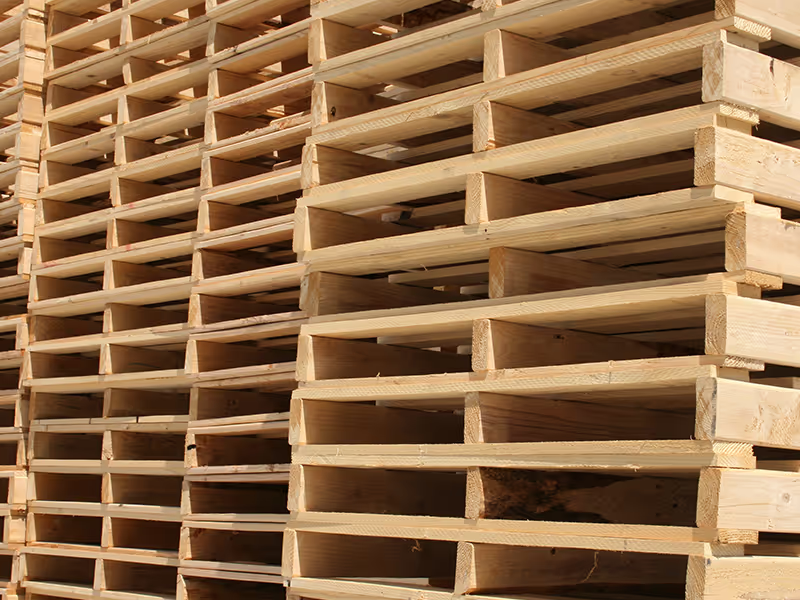
- Wooden pallets, crates, and wood packaging materials
- Certain stored goods and packaged products (depending on the commodity and requirements)
If you’re unsure whether your goods can be safely treated, our team can help you confirm the best approach and timeline before scheduling. Start here: contact Bizzy Bee.
When Is Commodity Fumigation Typically Needed?
While every situation is different, businesses often schedule commodity fumigation when:
- Pests are detected in stored goods or cargo (or there’s strong evidence of activity).
- A shipment must meet a buyer or destination requirement.
- Wood packaging materials must meet ISPM 15-related requirements (for example, if a trading partner requires treated/marked wood packaging).
- High-risk seasonal or route-related risks apply, such as cargo that may be subject to closer inspection.
USDA APHIS notes that wood packaging material entering or transiting the United States must be pest-free, appropriately treated, and marked as ISPM 15-compliant.
How Commodity Fumigation Works (Step-by-Step)
Exact steps vary by commodity and treatment plan, but most projects follow a fumigation process like this:
- Inspection and planning
A licensed fumigation professional reviews the commodity, its packaging, and where it will be treated (container fumigation or facility area). This is also where timing and documentation needs are confirmed. - Preparation and sealing
The treatment space is prepared so the fumigant can work effectively; this may include sealing a container or creating a contained treatment area. - Application and monitoring
The fumigant is introduced and monitored to reach the correct concentration and exposure time. - Aeration and clearance
After the exposure time, the area is aerated and cleared in accordance with safety requirements. - Documentation
For many business and shipping scenarios, proper documentation is just as important as the treatment itself.
What Documentation Might Be Required?
Documentation requirements depend on what you’re shipping and where it’s going, but commonly requested items include:
- Treatment records (what was treated, when, and how)
- Compliance paperwork for shipment requirements
- In some situations, a fumigation certificate may be required for international shipping or customs processing (requirements vary by destination and commodity).
Benefits of Commodity Fumigation
Commodity fumigation is popular in commercial settings because it can be:
- Comprehensive: Gas can reach pests in cracks, voids, and hard-to-access places.
- Efficient: A well-planned fumigation can reduce downtime compared to slower, piecemeal approaches.
- Protective for your brand: Fewer rejections, complaints, and surprises at inspection points.
For a quick overview of why fumigation is often chosen over other methods, see 5 Benefits of Fumigation.
How to Choose the Right Fumigation Partner
Commodity fumigation isn’t a “one-size-fits-all” job. When you’re comparing providers, look for:
- Licensed, trained specialists (not just general pest control)
- Clear safety procedures for application and aeration
- Strong documentation practices (especially for export-facing businesses)
- Experience with your cargo type and treatment setting (container, tarp, chamber, or facility)
If you need broader prevention support for an ongoing facility (not just one shipment), you may also benefit from a facility-wide plan. Consider Bizzy Bee’s commercial pest control services.
Talk with Bizzy Bee About Commodity Fumigation
A certified fumigation company, Bizzy Bee Exterminators has supported businesses with commercial fumigation services since 1991, helping protect products, shipments, and reputations with careful planning and compliance-focused execution.
If you’re dealing with a current shipment deadline or you’re planning ahead for a busy shipping season, reach out to request guidance and scheduling: contact Bizzy Bee.
Originally published February 15, 2019. Updated for accuracy and relevance in 2026.