Why Do Summer Pests Enter Commercial Facilities?
Summer heat and heavy rain alter the areas where outdoor pests find moisture and shelter. Thunderstorms can flood soil, leaf litter, and mulch beds. Extended heat can dry exposed ground while damp conditions remain beneath stored materials, beside leaking drip lines, around condensate discharge, or where sprinkler heads repeatedly spray an exterior wall.
These changes cause crickets, millipedes, earwigs, pillbugs, and centipedes to move. Commercial properties offer numerous access opportunities, including loading bays, frequently used entrances, gaps beneath doors, failed dock seals, slab joints, and openings around pipes or conduit.
Exterior lighting adds another factor. Fixtures beside service doors and loading areas can attract nighttime insects directly toward the building. Once pests reach the structure, even a small opening may be enough for them to enter.
What the Sighting Location Can Tell You
Where a pest appears often provides the best clue about its source. Facility teams should evaluate the affected area before treating the sighting as an isolated incident.
Crickets Near Loading Docks and Service Doors
Crickets around receiving areas are often associated with bright exterior lights, open dock bays, incomplete door seals, or gaps beneath personnel doors. House crickets found deeper inside the facility may require further investigation, as they can survive indoors when provided with warmth, food, and moisture.
A commercial inspection should evaluate the route between the exterior gathering point and the indoor sighting rather than focusing only on the cricket that was found.
Millipedes and Pillbugs Along Ground-Floor Walls
Millipedes and pillbugs depend on moist outdoor conditions. They may move toward a building after soil becomes saturated or when protected areas beside the foundation remain damp.
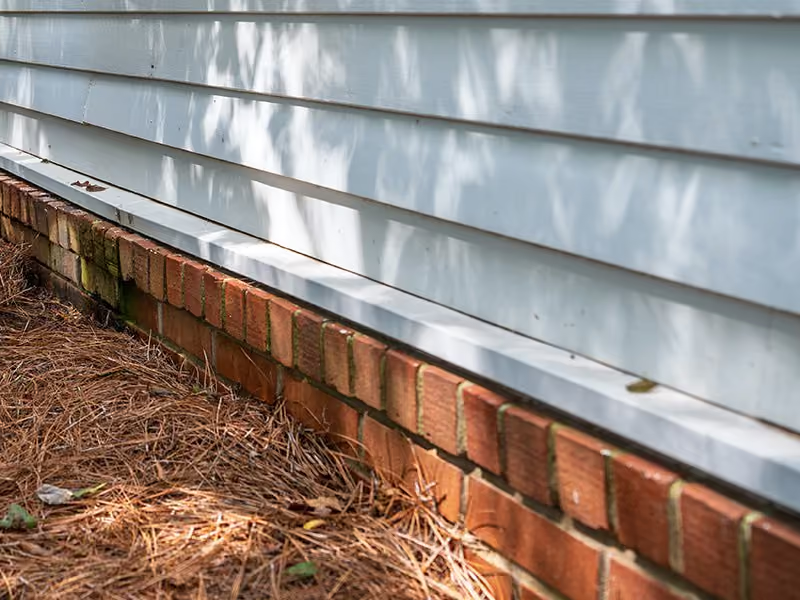
Millipedes found near one wall or doorway can point to a downspout discharging too close to the building, mulch installed against the structure, water crossing the pavement, a sprinkler head aimed toward the wall, or damaged weatherstripping.
Dead insects in one area typically indicate an exterior entry point, even when no live activity is visible indoors.
Earwigs Near Plumbing and Utility Areas
Earwigs favor protected, damp environments. When they appear in restrooms, break rooms, mechanical spaces, or utility areas, the facility should check for condensation, slow plumbing leaks, failed pipe seals, and openings around utility lines.
The corresponding exterior wall also matters. A dripping hose connection, wet mulch, or water collecting beneath equipment may be supporting activity just outside the structure.
Centipedes in Mechanical Rooms
A centipede in a mechanical or utility room can indicate excess moisture as well as the presence of smaller insects serving as prey.
Monitoring devices, drains, plumbing connections, and equipment voids should be inspected. Removing the centipede without addressing those conditions leaves the underlying source unchanged.
The University of Georgia Cooperative Extension identifies moisture correction, habitat reduction, lighting management, and effective door sweeps as important measures to limit pest movement around structures.
Why Nuisance Pests Matter in a Commercial Setting
The business impact depends on where the activity occurs and how the facility is used. A cricket in a warehouse utility room does not carry the same significance as an insect beside a restaurant service line, inside a healthcare property, or near products awaiting shipment.
Food-related facilities, manufacturers, healthcare operations, hospitality properties, and distribution centers may need to document the sighting in accordance with internal quality procedures or third-party audit requirements. Offices, retail locations, and managed properties face a different concern: visible pests can quickly generate tenant, employee, or customer complaints.
Correct identification helps the facility apply the appropriate response instead of treating every sighting as either harmless or an emergency.
How Facility Teams Should Respond
When pest activity is found, document the exact location, date, time, and surrounding conditions. Note relevant events such as recent storms, deliveries, open dock doors, plumbing work, a recent sprinkler cycle, a leaking drip line, or water collecting beside the foundation. A clear photograph or safely retained specimen can help the pest management provider confirm the species.
The immediate area should then be checked for a likely source or access point. Facility staff can correct straightforward maintenance problems, but uncoordinated pesticide applications should be avoided. They can interfere with monitoring, obscure the original activity pattern, or conflict with procedures established for sensitive areas.
A sighting in a customer-facing, food-handling, patient-care, or audited area should be reported to the pest management provider. Multiple pests or activity extending beyond the original location may also warrant professional evaluation. The findings and completed corrective action should be added to the facility’s pest log so management and quality teams have a clear record of the response.
How a Commercial Pest Management Plan Addresses Summer Pest Pressure
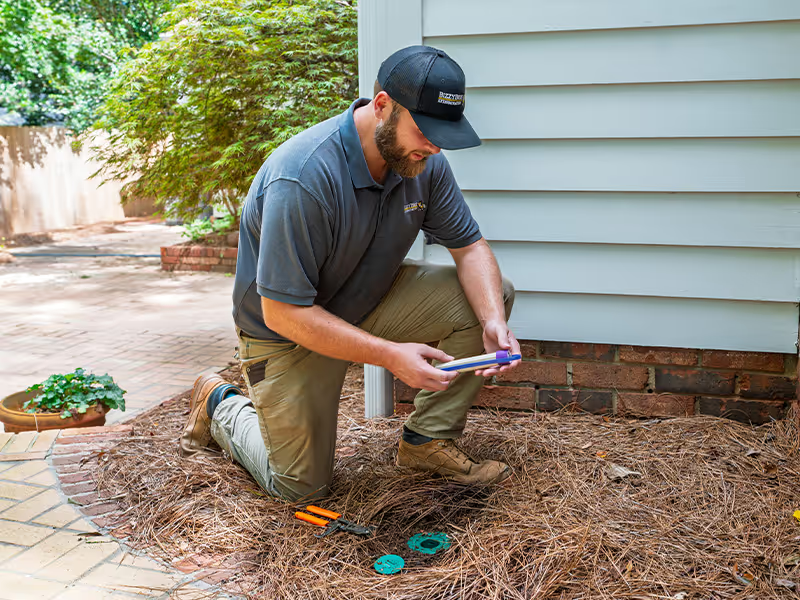
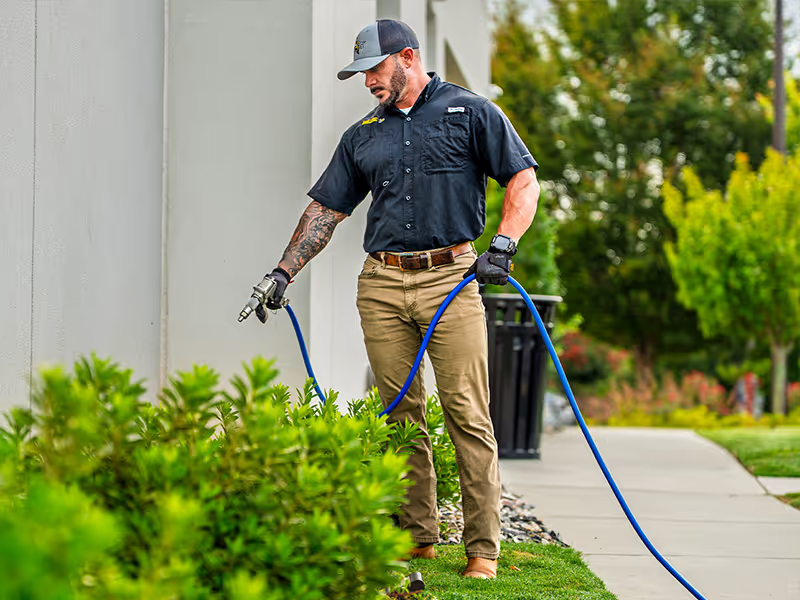
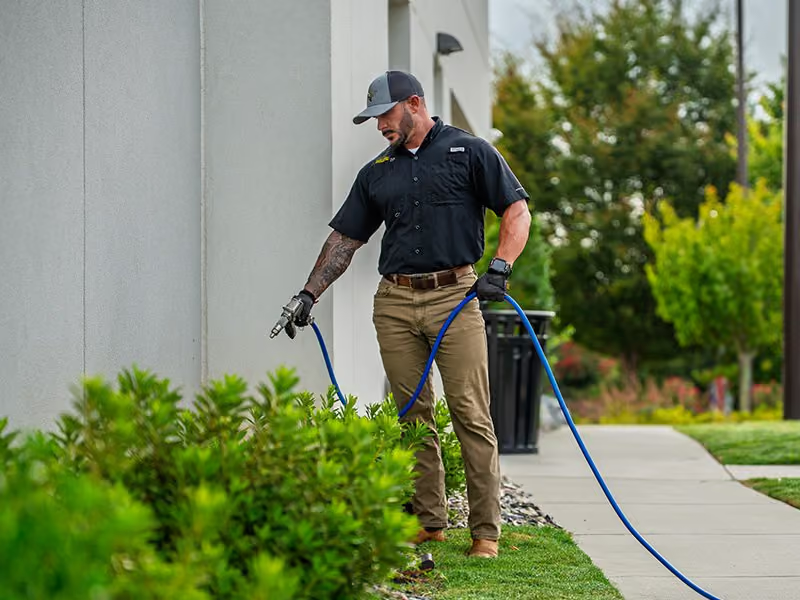
A commercial pest management program should connect observed activity to building conditions. That requires accurate identification, inspection of the source area, monitoring, exclusion recommendations, targeted treatment when appropriate, and documentation of the outcome.
This prevention-focused method is known as Integrated Pest Management. The Environmental Protection Agency describes IPM as an approach that uses site information and multiple control methods to manage pests effectively while limiting unnecessary pesticide use.
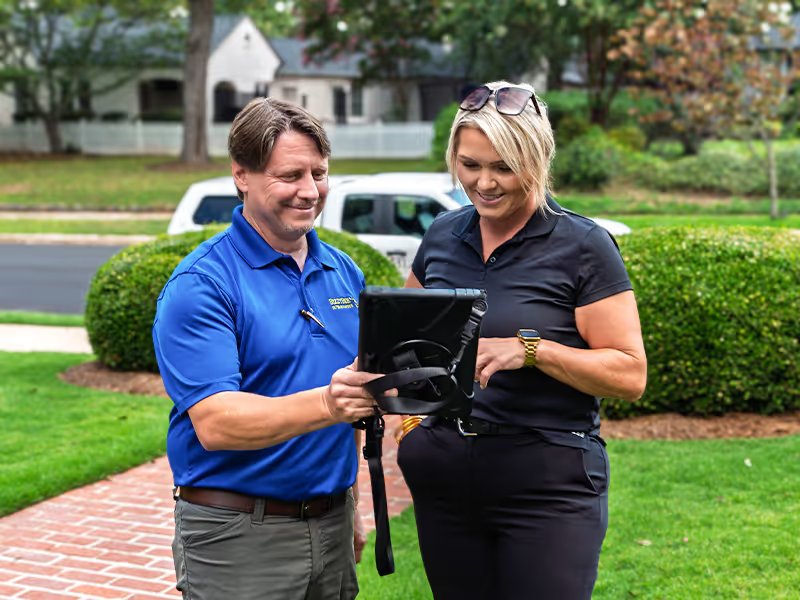
Bizzy Bee Exterminators’ commercial pest control service begins with an evaluation of the facility’s activity, structural access points, and operating requirements. A customized plan can then establish the appropriate service frequency, monitoring locations, corrective recommendations, treatment methods, and response process.
Commercial Pest Control in Georgia and Upstate South Carolina
In business since 1972, Bizzy Bee Exterminators is a member of the National Pest Management Association and Certified Pest Control Operators of Georgia. Our local, family-owned company and team of licensed and certified technicians serve a variety of businesses and industries, including restaurants, warehouses, manufacturers, healthcare properties, schools, hotels, offices, and retail facilities.
In Georgia, our area coverage includes Metro Atlanta and communities such as Alpharetta, Acworth, Covington, Oxford, and Winder. In Upstate South Carolina, our team serves Greenville, Anderson, Easley, Clemson, Seneca, and surrounding communities.
View our full Georgia and South Carolina service area.
Address Summer Pest Activity at the Source
Seeing occasional invaders or other pest activity in or around your facility? Bizzy Bee Exterminators will inspect the affected area, evaluate likely entry routes and exterior sources, and recommend a commercial pest management plan suited to your facility’s operating and documentation requirements.
Request a free commercial inspection or call (800) 273-4958.
Next-day service is available in many cases.