
How Are Hornets, Bees, and Wasps Similar?
In animal classification (domain, kingdom, phylum, class, order, family, genus, and species), each of the three insects in question belong to the same order called Hymenoptera. They each have similar builds, too, especially hornets and wasps since these two belong to the same family.
While some wasp species do not have stingers, many do, and all bee and hornet types have stingers as well. For the most part, each insect type’s wings create a similar dull hum when the insect is in flight, and all three pollinate to some extent to help the planet grow and blossom.
Other than that, bees, wasps, and hornets are fairly different from each other.
Facts About Hornets
- Family: Vespidae
- Native to: Tropical Asia
- Habitat: Nests built above ground, often in trees, deck or porch corners, and other similar locations.
- Diet: Omnivorous diet that includes leaves, tree sap, nectar, flies, bees, and other small insects.
- Hornets are vespids since they belong to the family Vespidae, just like wasps. In fact, all hornets are types of wasps (but not all wasps are hornets).
What Hornet Species Are in Georgia?
Hornets are not native to North America, and we only have a small number of species here in Georgia. The most common one we deal with is the European hornet, although we have recently seen the addition of an invasive species in our state, the yellow-legged hornet, which feeds on bees and poses a threat to our population of pollinators. In fact, the yellow-legged hornet is such a danger to our agricultural and environmental stability that the Georgia Department of Agriculture is asking residents to report any sightings of this species to help track, trap, and remove it from our state/country.
How Hornets Are Beneficial
Other than the yellow-legged hornet, the hornet species in Georgia are, in general, environmentally harmless and actually have positive impacts on our environment. Hornets help keep lawns and gardens healthy by eating plant-eating caterpillars, bugs, and spiders. And although they are not pollinators in the same efficient way bees are, hornets and other wasps seek nectar from flowers, causing them to collect and carry pollen from one plant to another.
How Hornets Are Harmful
Hornets are notoriously defensive and aggressive insects that will attack anything they deem a threat to themselves or their nest. And unfortunately, hornets commonly build their nests in locations around the house:
- Porches
- Decks
- Eaves and overhangs
- Stoops
- Lawn trees
If a hornet builds a nest anywhere on or near your house, it means you are sharing space with a hornet family, and you run the risk of being attacked every time you dare try to exit or enter your own home. Hornets interpret any move near their nest to be threatening and will use their stingers multiple times to drive the threat away. Plus, if a hornet’s nest is close to any entry door that is often used, you risk the insects entering your home and posing a threat to the people inside.
How to Remove Hornets From Your Property
While there are at-home and over-the-counter solutions you can try to remove a hornet from your home, professional pest control from a trusted exterminator can eradicate these insects and prevent them from renesting.
About Wasps
- Family: Vespidae
- Native to: Asia, Europe, South America, and Central America
- Habitat: Depending on the wasp species, these insects build nests in or above ground in various locations, including wooded areas, fields, urban settings, and residential neighborhoods.
- Diet: Omnivorous diet that includes leaves, tree sap, nectar, flies, bees, and other small insects.
- Wasps are vespids with a wide variety of species within the Vespidae family. Wasp types are divided into two general camps: solitary wasps that live alone and social wasps that live in colonies.
What Wasp Species Are in Georgia?
There are several wasp species in Georgia, including:
- Cicada killer wasp – Solitary, rarely aggressive
- Mud dauber (also known as a dirt dauber) – Solitary, rarely aggressive
- Paper wasp – Social, aggressive when threatened
- Red paper wasp – Social, aggressive when threatened
- Velvet ant wasp (also known as the cow killer ant) – Solitary, aggressive if disturbed or handled
- Yellowjacket – Social, very aggressive
And since all hornets are types of wasps, we also have the bald-faced hornet (social, aggressive when threatened) and, most commonly, the European hornet (social, aggressive when threatened).
How Wasps Are Beneficial
Just like hornets, wasps provide a natural form of pest control as they feed on insects that often destroy plants in lawns and gardens. Plus, since they feast on nectar, wasps also collect pollen and carry it to other plants, contributing to much-needed pollination.
How Are Wasps Harmful
While some wasps do not have stingers or an aggressive nature, a lot of them do, and it can be hard to tell which wasps are relatively safe and which ones will sting (and sting multiple times). If a wasp has built their nest near or on your house, you could experience painful stings should any of them consider you a threat while you occupy your own yard, porch, deck, or additional shared space.
If your yard attracts a wasp species that builds its nest underground, you, your children, or even your family pet can run the risk of unknowingly stepping on the nest and angering/threatening its inhabitants. And if an above-ground species builds their nests by your front door, on your porch, on your deck, or other areas, you again risk angering the inhabitants and experiencing painful stings.
Wasps sting and can sting several times—plus, their venom can be life-threatening to those with an allergy to stinging insects.
How to Remove Wasps From Your Property
Again, similar to treatment for hornets, there are over-the-counter solutions that are available if you want to tackle an infestation yourself. However, professional pest control services from a team like Bizzy Bee Exterminators can eradicate the wasps and apply a solution to significantly discourage renesting.
About Bees
- Family: Andrenidae, Apidae, Colletidae, Halictidae, Megachilidae, Melittidae, and Stenotritidae
- Native to: Asia, Europe
- Habitat: Bees have both natural and domesticated habitats, as bees are categorized as a type of livestock in America. Natural habitats can include hives or nests built in gardens, wooded areas, meadows, and other locations where flowers and flowering plants are easily accessible.
- Diet: Plant-based diet that includes pollen and nectar from flowers.
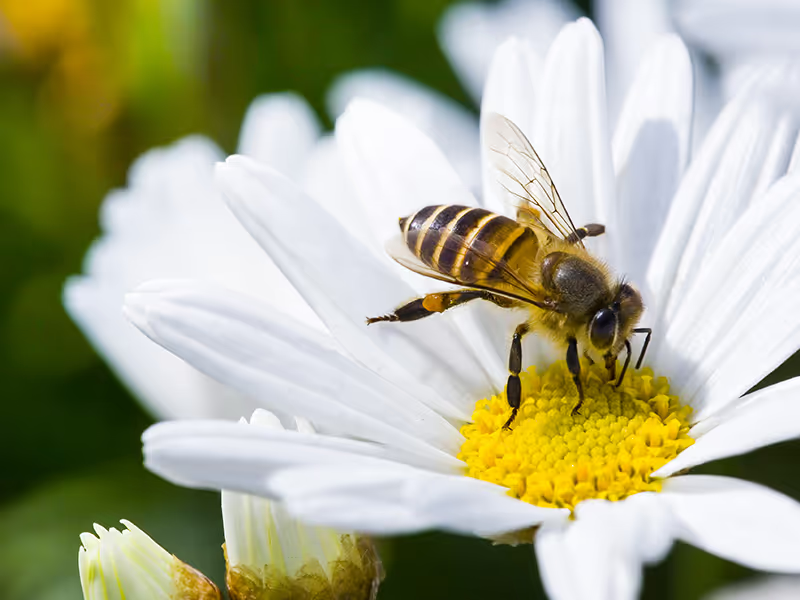
- Bees are highly valuable to the pollination process in nature and to keeping our plant foods growing. Like wasps, bees can be considered social or solitary.
What Bee Species Are in Georgia?
In Georgia there are several types of bees, including:
- Bumblebee – Social, generally docile but can sting when threatened
- Carpenter bee – Solitary, generally docile but can sting when threatened
- Honey bee – Social, generally docile but can sting when threatened
- Sweat bee – Solitary, generally docile but can sting when threatened
How Bees Are Beneficial
Bees are the most efficient and most significant pollinators for our crops, plants, and flowers. It’s crucial to maintain a healthy bee population to ensure we continue to yield high-quality crops nationally and internationally.
Plus, bees produce natural and useful products, including:
- Honey – A sweet, nutrient-packed antioxidant with anti-inflammatory antimicrobial properties. Honey is often attributed to helping soothe coughs, aid in digestion, lower cholesterol, and lower blood pressure.
- Bee pollen – Pollen that has already been harvested by bees. Bee pollen is packed with anti-inflammatory and antioxidant properties that can help boost metabolism, improve allergies, increase wound healing, and more.
- Royal jelly – A nutrient-packed bee secretion. Royal jelly comes in capsule or powder form and has been observed to be beneficial for reducing or improving menopausal symptoms.
- Beeswax – A wax produced by honey bees in the honey-making process. Beeswax is used to make candles, creams, cosmetics, lubricants, and more.
- Bee venom – Venom collected straight from bees. Bee venom is used medicinally to help with bee sting allergies, osteoarthritis, Parkinson’s disease, nerve pain, and other conditions. It can also be added to creams and ointments to help with skincare needs like skin regeneration and collagen production.
How Bees Are Harmful
The most docile insects on the list, bees can still pack a stinging punch if they feel threatened by your presence. And for people with a bee sting allergy, they can be downright life-threatening.
It’s rare for social bees to make their home in or around your home, but it does happen on occasion. If you discover a honey bee hive in your home (such as the attic, crawl space, basement, or even inside the walls), call your local beekeeper or professional pest control expert to safely remove the hive without harming the colony.
If you’re dealing with a hornet, wasp, or bee issue at your home or place of business, contact Bizzy Bee Exterminators.
Schedule a treatment or removal service at your home or commercial property and regain the peace and comfort of a sting-free space!
Call us to schedule termite control or pest control at your home today: 1-800-273-4958