

Why Mosquitoes Are So Persistent in the Southeast
The Southeast creates ideal conditions for mosquitoes:
- Long warm seasons
- High humidity
- Frequent rainstorms
- Dense vegetation
In areas like Atlanta and Greenville, mosquito activity can begin in early spring and continue into the fall.
Once populations establish, they tend to persist without targeted control.
This is especially common in neighborhoods with dense trees, drainage areas, or nearby wooded spaces.
Over time, this can begin to affect how outdoor areas are used on a daily basis.
Common Mosquito Species in Georgia & South Carolina
Not all mosquitoes behave the same. Several species are especially common in this region.
Aedes albopictus Mosquitoes (Aggressive Day Biters)
- Often called “Asian tiger mosquitoes”
- Bite during the day
- Thrive in small water sources like containers and plant trays
- Known for aggressive behavior
Culex Mosquitoes (Evening Biters)
- Most active at dusk and night
- Common around standing water and drainage areas
- One of the primary mosquito types linked to West Nile virus transmission
Anopheles Mosquitoes
- Active at night
- Prefer cleaner water sources
- Less noticeable, but still present in parts of the Southeast
The Mosquito Lifecycle (And Why It Matters)
A mosquito lifecycle refers to the stages a mosquito goes through from egg to adult.
Mosquitoes reproduce quickly—much faster than most people expect.
The 4 Stages:
- Egg
- Larva (in water)
- Pupa
- Adult
Under the right conditions, this entire cycle can happen in about a week.
That means small, overlooked water sources can quickly lead to new mosquito populations.
Why Mosquitoes Bite
Only female mosquitoes bite—and they do it for a reason.
Female mosquitoes need a blood meal to produce eggs. After feeding, they return to a water source to lay those eggs and start the cycle again.
That’s why mosquito activity tends to increase quickly once they establish in an area. As long as breeding sites are available, the cycle continues.
Because females must return to water to lay eggs after feeding, controlling breeding sites is one of the most important parts of reducing mosquito populations.
Are Mosquitoes in the Southeast Dangerous?
Because mosquitoes feed on blood, they can also transmit certain diseases.
In Georgia and South Carolina, the most common concern is West Nile virus, which is spread through mosquito bites.
While not every mosquito carries disease, the risk increases as mosquito populations grow and remain active throughout the season.
Because different mosquito species behave differently—some bite during the day and others are more active in the evening—exposure can happen at different times.
Where Mosquitoes Breed and Rest
Mosquito activity is closely tied to environmental conditions.
Mosquitoes rely on standing water to reproduce.
Even small amounts are enough—some species can lay eggs in as little as a bottle cap’s worth of water. These eggs develop into larvae and eventually become adult mosquitoes within days under the right conditions.
Common Breeding Areas:
- Clogged gutters
- Birdbaths
- Plant trays
- Buckets or containers
- Low areas in the yard
- Drainage areas
Common Resting Areas:
- Shrubs and bushes
- Tall grass
- Shaded areas around structures
- Under decks and porches
Properties that combine moisture and shade tend to support higher mosquito activity.
When Mosquito Season Starts (and Ends)
In Metro Atlanta and Upstate South Carolina:
- Early Spring (March–April): Activity begins
- Summer (May–August): Peak mosquito season
- Fall (September–October): Activity gradually declines
Rain plays a significant role.
Following periods of rainfall, mosquito populations can increase rapidly due to newly available breeding sites.
Why Mosquito Activity Persists
Mosquito control can be frustrating because several factors are usually involved.
- Breeding sites may exist on nearby properties
- Mosquitoes can travel between yards
- New populations develop continuously
If the breeding cycle is not interrupted, activity will continue throughout the season.
What Helps Reduce Mosquito Activity
Basic property maintenance can help reduce mosquito pressure, including:
- Minimizing standing water where possible
- Maintaining grass and vegetation
- Reducing dense, shaded areas
However, these steps alone often do not address the full scope of mosquito activity in regions with high humidity and frequent rainfall.
Professional Mosquito Control: What to Expect
When mosquito activity remains consistent despite basic prevention efforts, a professional mosquito control program is a wise course of action.
At Bizzy Bee Exterminators, we’ve been helping homeowners across Metro Atlanta and Upstate South Carolina since 1972. We see the same pattern every year: once mosquito populations establish, they require consistent treatment to stay under control.
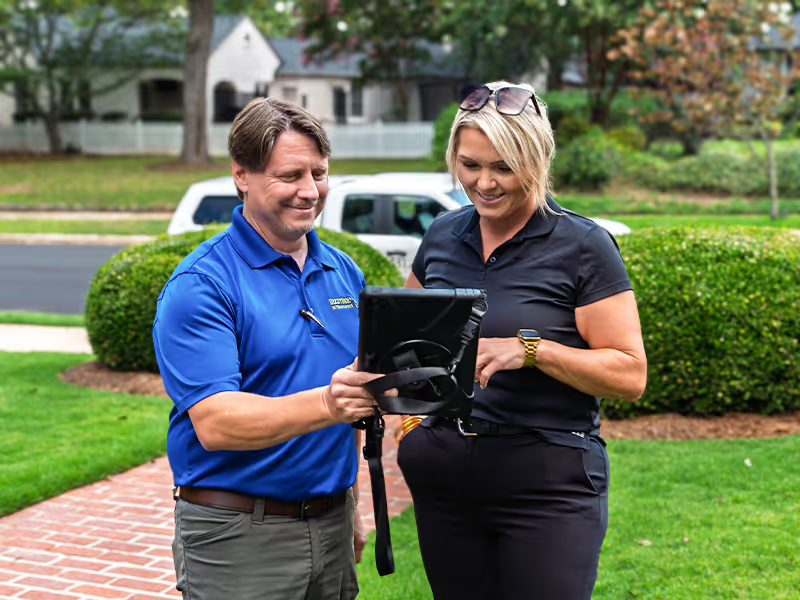
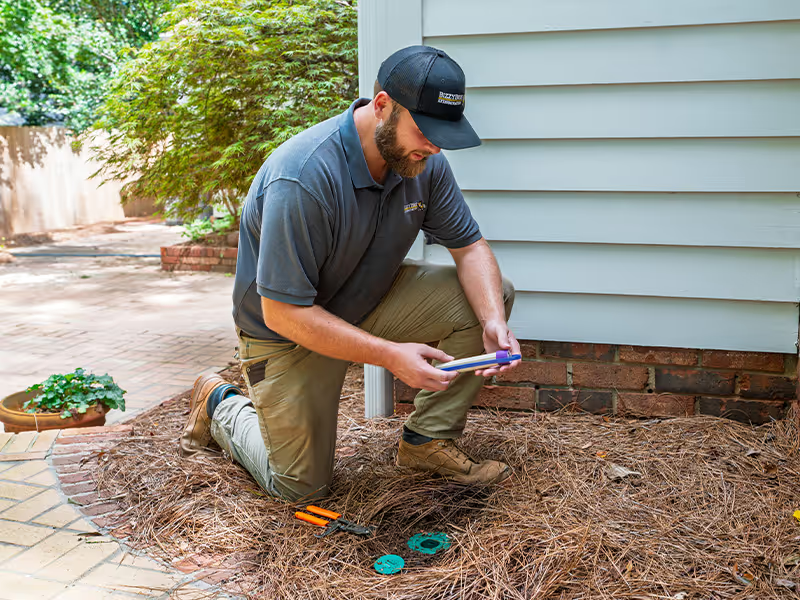
Mosquito Inspection
A thorough inspection identifies:
- Breeding areas
- Resting locations
- Environmental conditions contributing to mosquito activity
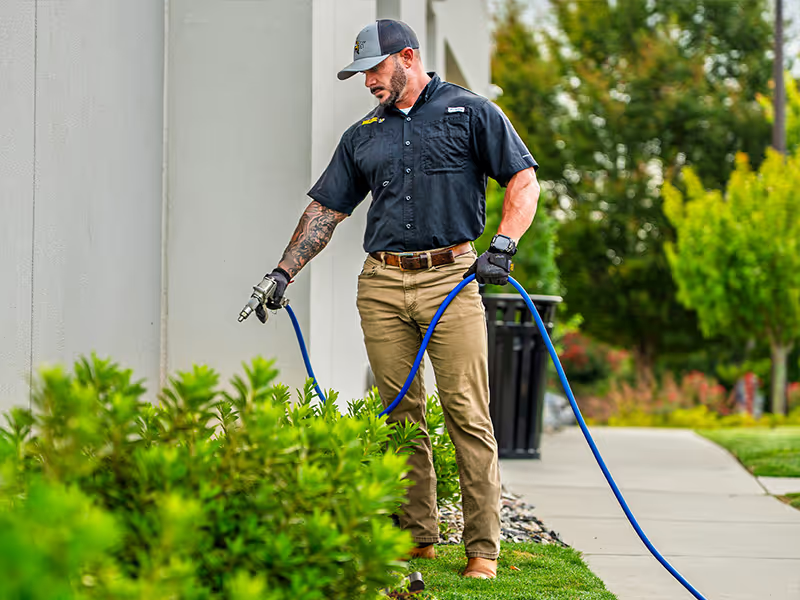
Targeted Treatment
Applications focus on:
- Areas where mosquitoes rest
- Areas where breeding occurs
Monthly Service (April - September)
Because mosquitoes reproduce quickly, treatments are typically performed throughout the season to:
- Reduce adult populations
- Interrupt the lifecycle
- Prevent rebound activity
Many homeowners notice a difference quickly once treatments begin, especially during peak mosquito season.
A Smarter Approach: In2Care®
The In2Care® Mosquito Trap is an advanced solution designed to reduce mosquito populations at the source.
- Attracts egg-laying mosquitoes
- Transfers a larvicide and biological agent
- Allows contamination to spread to additional breeding sites
This approach helps reduce mosquito populations beyond what surface treatments alone can achieve.
Mosquito Control FAQs for Homeowners in the Southeast
How far can mosquitoes travel?
Most mosquitoes stay relatively close to where they hatch, often within a few hundred feet.
However, some species can travel farther, especially if they’re searching for a blood meal or new breeding sites. That’s why mosquito problems aren’t always limited to your own property.
Can mosquitoes breed in my swimming pool?
Properly maintained swimming pools are not ideal breeding sites for mosquitoes.
Moving, filtered, and chemically treated water typically prevents mosquito larvae from developing. However, problems can arise if a pool is not maintained—such as when water becomes stagnant, untreated, or collects in pool covers or surrounding areas.
Do professional mosquito treatments eliminate mosquitoes completely?
No treatment can eliminate mosquitoes entirely.
The goal of professional mosquito control is to significantly reduce populations and keep them under control throughout the season, making outdoor spaces more usable and comfortable.
Do bats serve as effective mosquito control?
Bats are often mentioned as a natural way to reduce mosquitoes, but they are not a reliable solution for controlling mosquito populations.
While bats do eat insects, mosquitoes make up only a small portion of their diet. Relying on bats alone will not significantly reduce mosquito activity around a property.
In addition, attracting bats can introduce other concerns, including potential health risks and unwanted nesting around structures.
Take the Next Step—Contact Bizzy Bee Exterminators
If mosquito activity is ongoing on your property, a professional treatment program can help reduce populations and stop new mosquitoes from hatching.
Locally owned and family-operated for more than 55 years, Bizzy Bee Exterminators offers effective mosquito control in Acworth, Oxford, and Metro Atlanta, as well as Anderson, Greenville, and Upstate South Carolina.
For more information about treatment options, contact our team.