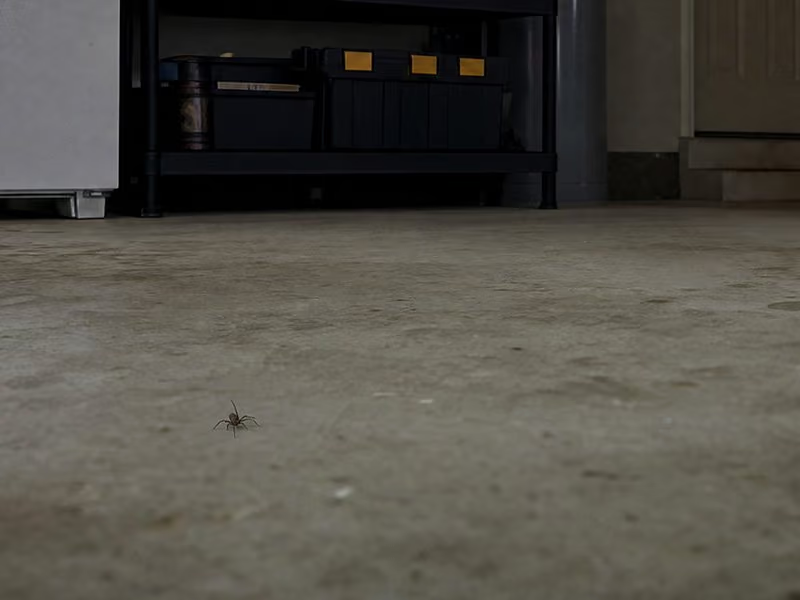
Wolf spiders can be startling to find indoors. They are fast-moving, often hairy, and some species are large enough to get your attention when one runs across a garage floor or appears near a doorway.
Despite their appearance, wolf spiders are not considered medically significant spiders. They primarily live outdoors and hunt insects and other small arthropods rather than waiting for prey in a web. When they turn up inside, they have usually wandered through an opening around the home.
Understanding their appearance and behavior can make it easier to identify a wolf spider and determine whether repeated sightings are worth addressing.
Wolf spiders are most active and noticeable from late spring through fall in Georgia and South Carolina. Activity generally increases in May and remains high through October before declining as temperatures cool. Wolf spiders can still be encountered during the colder months, but sightings are typically less common.
Wolf spiders belong to the Lycosidae family, a large group of hunting spiders found throughout North America.
Unlike spiders that build webs to capture prey, wolf spiders actively hunt. They use their strong legs, eyesight, and ability to detect movement and vibration to locate insects and other small arthropods.
Many species are active at night, although some also hunt during the day. During periods of inactivity, wolf spiders typically stay in protected areas such as leaf litter, ground cover, cracks, burrows, or other sheltered spaces.
Wolf spiders normally live outdoors. Those found inside have usually wandered through an opening, although insect activity around a structure can make the area more attractive to them.
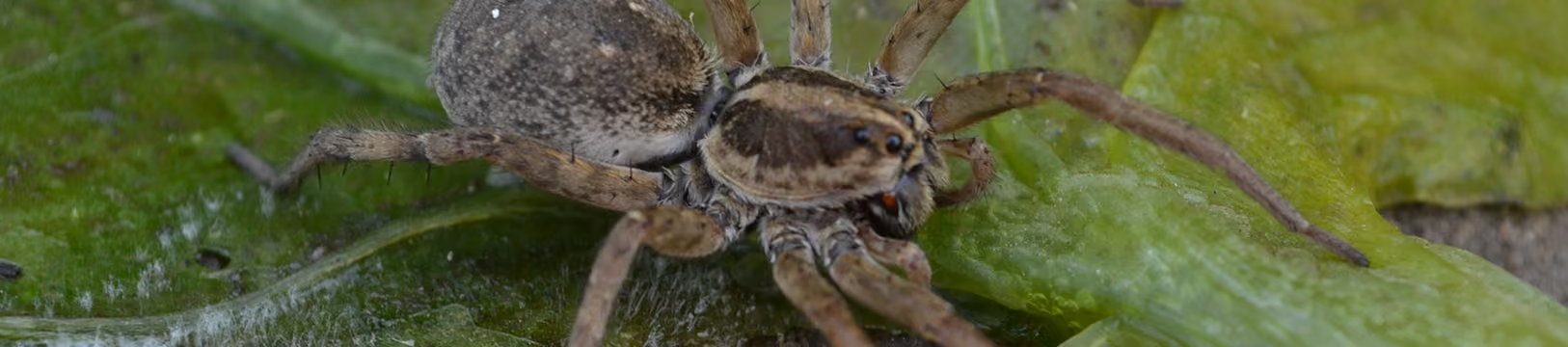
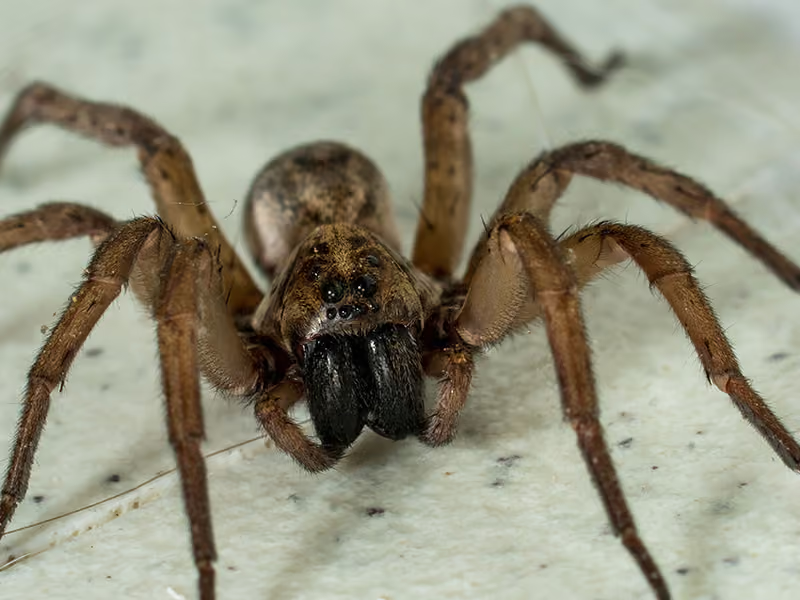
Wolf spiders vary in size and appearance depending on the species.
Common characteristics include:
Some species can become quite large. The Carolina wolf spider, which occurs in the Southeast, is the largest wolf spider in the United States.
Female wolf spiders also have an unusual and distinctive way of caring for their young. A female carries her egg sac attached to her spinnerets. After the eggs hatch, the spiderlings climb onto her abdomen and remain there for a period of time.
Seeing a female covered in tiny spiderlings can look startling, but it is normal wolf spider behavior.
Wolf spiders are sometimes mistaken for brown recluse spiders because both can be brown. However, wolf spiders typically have sturdier, hairier bodies and noticeable markings, while brown recluses have a more uniform appearance and six eyes arranged in three pairs.
Brown recluse spiders are also considered extremely rare in Georgia, so a brown spider found around a Georgia home should not automatically be assumed to be one.
Wolf spiders look intimidating, but they are not considered medically significant spiders.
They are not aggressive toward people and normally try to escape when disturbed. Bites are uncommon and generally occur when a spider becomes trapped against the skin or is handled.
If a bite does occur, it can cause temporary pain, redness, or localized swelling. Serious medical effects are not expected from typical wolf spider bites.
As with any bite or sting, seek medical attention if symptoms are severe, continue to worsen, or cause concern.
For most homeowners, the primary issue with wolf spiders is their size, speed, and tendency to appear unexpectedly indoors.
Wolf spiders primarily live outdoors, so finding one inside does not necessarily mean you have an indoor spider infestation.
Repeated indoor sightings can point to accessible entry points, favorable hiding areas around the home, or insect activity that gives these hunting spiders more reason to remain nearby.
Wolf spiders generally do not establish indoor populations the way pests such as German cockroaches or bed bugs can.
Because wolf spiders hunt at ground level, they commonly enter through openings close to the foundation.
Possible entry points include:
A spider found indoors may simply have wandered inside, but repeated sightings can make it worthwhile to inspect the exterior for accessible entry points.
Wolf spiders prefer protected locations where they can remain out of sight between periods of hunting.
Indoors, they may be found in garages, basements, crawl spaces, closets, and other storage areas, as well as near baseboards, exterior doors, furniture, and stored items.
Outdoors, common sheltering areas include leaf litter, mulch and ground cover, beneath stones or landscape materials, woodpiles, tall grass, shrubs, and other vegetation.
To make your home less accessible and appealing to wolf spiders:
These steps can reduce both entry points and the conditions that attract hunting spiders close to the house.
Bizzy Bee Exterminators includes spiders in our home pest control programs. Depending on the plan and conditions around the property, service can include exterior treatments, interior treatment as needed, and exterior de-webbing.
Our year-round plans cover more than 22 common household pests and are backed by Bizzy Bee's 100% satisfaction guarantee for covered pests.
If wolf spiders keep appearing inside, we can evaluate the problem and recommend the appropriate pest control plan.
Wolf spiders are not considered a significant threat to dogs or cats. A pet may occasionally disturb or try to catch one, but serious problems are uncommon.
No. Wolf spiders are active hunting spiders in the Lycosidae family, while common house spiders are web-building spiders that are much more likely to remain indoors.
Yes. Wolf spiders are opportunistic hunters that primarily feed on insects and other small arthropods, including other spiders. What they eat depends largely on what prey is available and small enough for them to capture.
Since 1972, our locally owned, family-operated team has provided pest control for homes and businesses throughout Georgia and parts of South Carolina.
Contact Bizzy Bee Exterminators or call (800) 273-4958 to request a pest control quote.

Great business. Punctual, professional, and cost-effective. Call Bizzy Bee for all your pest control needs
Dustin H.
Winder, GA.

I have been using BizzyBee at my restaurant for several months now and I am so happy with the overall service. I highly recommend for all your pest needs!
Amanda H.
Winder, GA.

We have been using Bizzy Bee for 10+ years now. Just had our next visit in our new place in Monroe. Cecilia was Very knowledgeable, friendly and courteous. Thank you Bizzy Bee for your services. We recommend this firm for anyone's pest control needs.
Richard K.
Monroe GA.


Helpful Tips & Info