
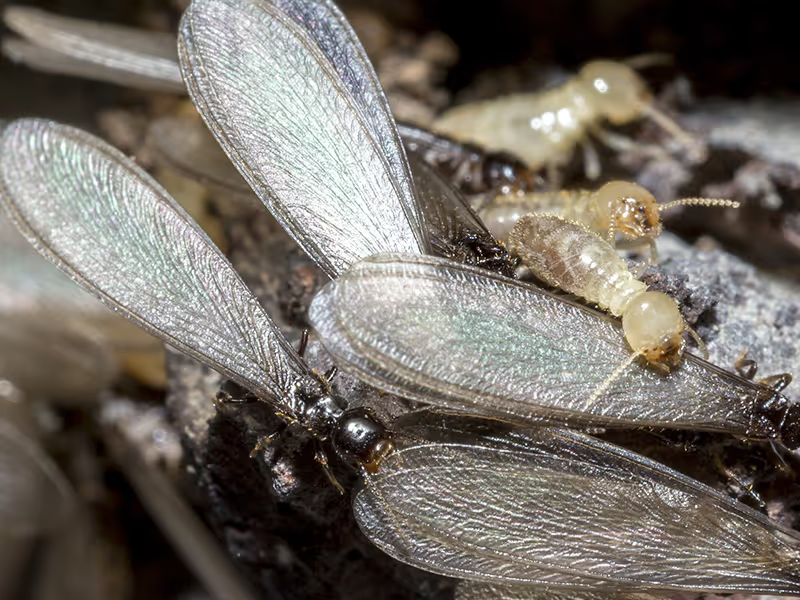
Quick Ways To Tell Termite Swarmers From Flying Ants
Use these quick identifiers first, then confirm with the detailed sections below.
- Waist: Termite swarmers have a thicker, more uniform body; flying ants have a narrow “pinched” waist.
- Antennae: Termite swarmers have straighter antennae; flying ants have elbowed (bent) antennae.
- Wings: Termite swarmers have two pairs of wings that are about the same length; flying ants typically have larger front wings and smaller back wings.
- After Swarming: Termites often shed wings, so you may find small piles of clear wings near windows and doors.
For more help with what subterranean termites look like locally, see our pest profile on eastern subterranean termites.
What Subterranean Termite Swarmers Are (And Why They Show Up)
Subterranean termite swarmers are reproductive termites. Their job is to leave a mature colony, pair up, and start a new colony. The swarmers themselves aren’t the ones actively damaging wood—but their presence is a major red flag because it usually means:
- A colony is nearby in the soil (subterranean termites live in the ground)
- Conditions are right for expansion (warm temperatures, moisture)
- The property may already have hidden termite activity (if the swarm occurs indoors)
Homeowners most often notice termite swarmers:
- Near windows, sliding glass doors, and light fixtures
- After warm, wet weather (and sometimes around lights at night, depending on the species)
If you’re seeing swarmers indoors, that often means a colony is already established, and it’s time for action: schedule an inspection today!
Even if you haven’t seen a swarm, now is a good time to review common warning signs in our guide: Signs Of Termites In Your House.
What Flying Ants Are (And Why They Show Up)
Flying ants are simply ants in their reproductive stage. Many ant species produce winged adults at certain times of year. A swarm of flying ants can mean:
- A mature ant colony is nearby
- The ants are leaving to start new colonies
- Moisture issues are attracting ants (especially near kitchens, bathrooms, or crawl spaces)
Unlike subterranean termites, flying ants do not need soil-to-wood access to survive. Some ants can nest in wall voids or damp wood, but they do not typically consume structural wood the way termites do.
If you’re dealing with ant issues more broadly, our identification library can help you narrow it down—start with carpenter ants and Argentine ants.
Termite Swarmers Vs. Flying Ants: The Key Differences
If you only remember three things, focus on these.
Wings: Same Length Vs. Different Length
- Subterranean termite swarmers have two pairs of wings that are similar in size and length.
- Flying ants have front wings that are usually longer than the back wings.
Termite wings often look longer than the body and can appear more “delicate.”
Waist: Thick Vs. Pinched
- Termites have a thicker, more uniform body.
- Ants have a visible “pinch” between the thorax and abdomen (a narrow waist).
Antennae: Straight Vs. Elbowed
- Termite antennae tend to look straight (or gently curved).
- Ant antennae are typically elbowed, with a noticeable bend.
Behavior Clues You May Notice Around Your Home
Sometimes the behavior is the giveaway—especially if you see them indoors.
Clues That Point To Subterranean Termites
- Shed wings on window sills, counters, or near baseboards
- Swarmers clustering near light sources indoors
- Winged insects showing up around crawl space vents, garage edges, or expansion joints
Subterranean termites move from the soil into your home by building protective mud “tubes” along foundations and other surfaces.
Clues That Point To Flying Ants
- Winged ants gather briefly and then disappear
- Activity near kitchens/pantries, or near moisture sources
- Ants (winged or not) appearing on counters or trailing along baseboards
When Subterranean Termites Commonly Swarm In Our Area
Most homeowners notice swarms after a warm rain — that mix of heat and moisture is like a green light for termites. There isn’t necessarily a single “termite swarmer day.” But in our region, homeowners commonly notice subterranean termite swarmers during:
- Spring through early summer, especially after warm rains
- Occasional swarms during other warm, wet periods
Even if the swarm is short-lived, it’s still worth taking seriously. A swarm doesn’t guarantee your home is infested, but it strongly suggests termites are active nearby.
Why The Difference Matters For Homeowners
If They’re Flying Ants
In most cases, the risk to your structure is low. You still may want control if ants are nesting in wall voids or if you’re seeing repeated activity, but it’s rarely an emergency.
If They’re Subterranean Termite Swarmers
This is the situation to act on quickly.
Subterranean termites can cause costly damage because they feed on cellulose materials (including structural wood). By the time swarmers appear indoors, a colony is often already mature.
If you want to understand treatment approaches before you schedule service, these resources can help:
- Everything You Need To Know About Termite Control
- Bait System Vs. Liquid Application: Which Termite Treatment Is Better?
What To Do If You Find Winged Insects Indoors
If you’re not sure what you’re seeing, don’t panic and avoid using DIY spray (it won’t solve the problem). Instead, note where you observed activity, capture an insect if you can (or take a picture), and note where you saw activity. Finally and most importantly, schedule a professional termite inspection.
An inspection helps confirm:
- Whether the insects are termites or ants
- Whether there’s evidence of subterranean termite activity
- What treatment (if any) is recommended
If you’re in the buying/selling process, you may also need documentation. Here’s what to expect: Why You Need A Termite Letter Inspection Before Selling Your Home.
If you want a professional to confirm what you’re seeing and explain your options, Bizzy Bee Exterminators can help. Contact us today to schedule your inspection!
Termite vs. Flying Ant FAQs for Homeowners
Can Termites and Flying Ants Show Up at the Same Time?
Yes. Spring and early summer are active times for many insects. That’s why physical features (wings, waist, antennae) are more reliable than timing alone.
If you’re not 100% sure, don’t guess—an inspection can confirm whether you’re dealing with flying ants or subterranean termite swarmers and what (if anything) needs to happen next.
I Only Saw a Few—Does That Still Matter?
It can. A small indoor appearance may still be termites that entered through a gap and were attracted to light. It’s worth checking, especially if you find shed wings.
Are Swarmers Proof My House Has Termites?
Not always—but it’s an important warning sign. Swarmers can come from a colony near the home, a neighbor’s property, or from activity under porches, patios, or landscaping. And if you’re looking for prevention tips (especially around moisture and wood-to-soil contact), How To Safeguard Your Home Against Termites is a great next read.
Are Subterranean Termites Active in Winter?
They can be, especially in milder conditions or protected areas like crawl spaces. If you’re curious about off-season activity, read: Are Termites Active In Winter?.
Will My Homeowners Insurance Cover Termite Damage?
Unfortunately, most homeowners' insurance policies do not cover termite damage. That’s because it is considered preventable through home maintenance.
When to Call for Termite Control in Georgia and South Carolina
If you notice:
- Winged insects indoors
- Shed wings near windows/doors
- Any signs of termite activity (mud tubes, damaged wood, blistered paint)
…it’s time to get a professional opinion. Better yet, sign up for termite protection before wood-destroying termites have the chance to cause damage. Because in Georgia and South Carolina, it’s not a matter of if, but when.
Serving Metro Atlanta and North Georgia, and Upstate South Carolina since 1972, Bizzy Bee Exterminators is here to help property owners protect their homes and businesses from termites and other pests!