
What This Article Will Cover
In this article, we’ll help Georgia homeowners and business owners identify the most common rodents—including house mice, Norway rats, and roof rats—and spot the warning signs of an infestation. You’ll also learn where these rodents hang out, how seasonal activity affects them, what steps you can take to protect your property, and how Bizzy Bee Exterminators can help.
House Mice
What They Look Like
House mice are small, about 2 to 4 inches long (not including their tails), with grayish fur and creamy underbellies. They have pointy noses and large, rounded ears. Their tails are covered with a fine layer of fur and are about the same length as their bodies.
How They Behave
These mice are mostly active at night, quietly exploring homes and buildings for snacks. They’ll eat almost anything, from crumbs on the counter to food tucked away in the pantry.
Where They Hang Out
These little rodents like hidden, quiet spots where they feel safe. You might notice signs of them in closets, behind appliances, in storage boxes, along walls, in attics, in wall voids, and in pantries. They often choose places that give them easy access to food, warmth, and shelter, staying out of sight while exploring for a meal.
Why They’re a Problem
Even a few mice can create big headaches. Their droppings can contaminate food, and they chew on wires, insulation, and pipes, which can cause damage and pose safety risks. On top of that, mice reproduce quickly, so a small problem can grow fast if left unchecked.
Norway Rats
What They Look Like
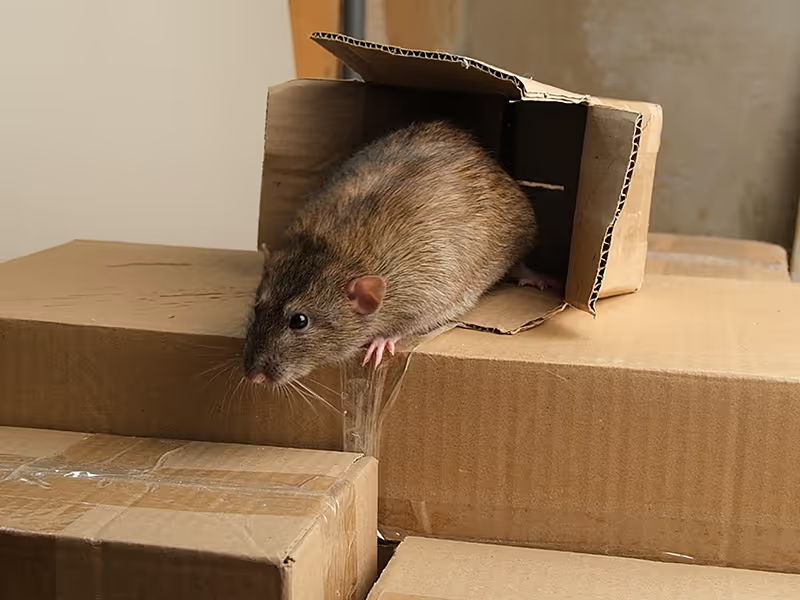
Norway rats are large and stocky, with bodies that can grow up to 9 inches long (not including their tails). Their fur is brown, with a mix of black hairs, and their underbellies are lighter. They have blunt noses, small ears, and thick, scaly tails that are slightly shorter than their body length.
How They Behave
These rats are primarily nocturnal and prefer to stay close to the ground. They’re strong swimmers but not great climbers, so they tend to move along floors and low areas while searching for food. Norway rats are opportunistic eaters and will consume a wide variety of foods depending on what’s available.
Where They Hang Out
Norway rats like hidden, low-lying spots where they feel secure. You might see signs of them in basements, crawl spaces, wall voids, along foundations, storage areas, and sheds. They choose locations that provide easy access to food, water, and shelter, keeping them mostly out of sight as they move around.
Why They’re a Problem
Norway rats can cause serious issues for property owners and managers. They spread disease through droppings, urine, and occasionally direct contact. They also chew on wires, insulation, and structural materials, creating safety hazards. Because they reproduce quickly, even a few rats can turn into a full infestation in a short time.
Roof Rats
What They Look Like
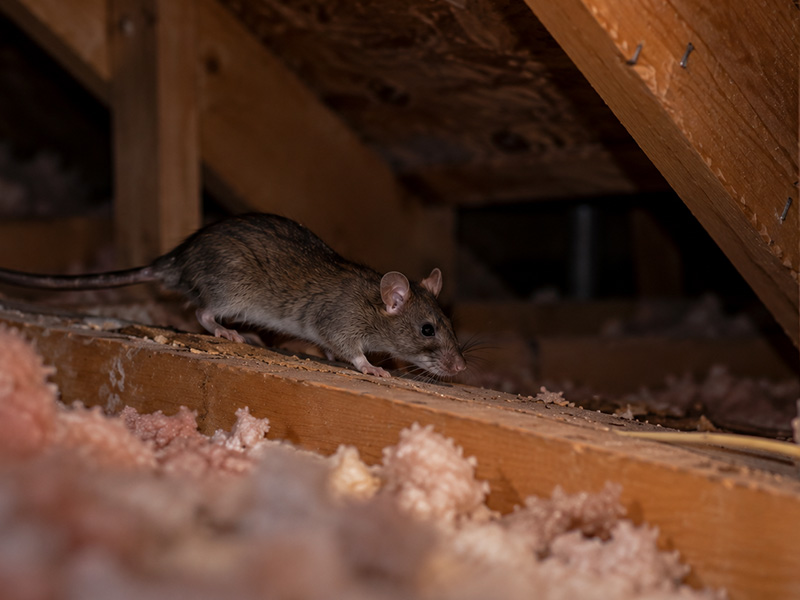
Roof rats are long and slender, usually growing up to 8 inches in body length (not including tails). Their fur is dark gray to black with lighter underbellies. They have pointy noses, large eyes, and long, scaly tails that are often longer than their bodies.
How They Behave
Roof rats are excellent climbers and mostly active at night. They’re agile and curious, exploring for food wherever they can reach. Their diet is varied and depends mainly on what’s available, including fruits, nuts, and stored foods.
Where They Hang Out
Roof rats prefer elevated, hidden areas that give them safety and easy access to food. You might notice signs of them in attics, rafters, wall voids, rooflines, storage areas, and fruit trees near homes. They often stay out of sight while quietly moving around to feed.
Why They’re a Problem
Roof rats pose risks similar to those of other rodents. Their droppings can contaminate food, and they can chew on wires, insulation, and other materials, potentially causing damage or posing a fire hazard. They reproduce quickly, so a small number of roof rats can grow into a significant infestation if left unchecked.
Georgia Rodents At a Glance
While all three rodents can cause problems, they’re fairly easy to tell apart once you know what to look for. House mice are tiny and gray with creamy bellies, with furry tails about as long as their bodies. Norway rats are much larger and stockier, brown with a mix of black, and have shorter, scaly tails. Roof rats are medium-sized, dark gray to black, with long scaly tails, and are excellent climbers. Knowing these differences can help you spot which rodent might be in your home or business so you can take action quickly.
Seasonal Rodent Activity in Georgia
Rodents in Georgia are active year-round. During fall and winter, you may notice more activity indoors, as cooler temperatures and limited outdoor food drive them to seek warmth, water, and shelter inside homes and businesses.
In spring and summer, rodents are more active outdoors, foraging and exploring while continuing to breed year-round. If they’ve moved into your home during any season, they won’t leave on their own—they’ll continue using your property as a base until the problem is addressed.
Being aware of these patterns can help you spot activity early and take steps to prevent a small problem from becoming a full infestation.
Common Signs of a Rodent Infestation
Look for these warning signs in your Georgia home or business:
Droppings
- House mice: Tiny, dark, rice-sized droppings, often in pantries, cupboards, along walls, or near food.
- Norway rats: Large, dark, cylindrical droppings found in basements, crawl spaces, or along foundations.
- Roof rats: Slender, dark droppings often found in attics, rafters, or high storage areas.
Gnaw Marks
Rodents chew constantly to keep their teeth sharp. You might see marks on wood, wires, insulation, or food containers. House mice often chew smaller objects; rats can damage larger structural items.
Noises
Scratching, rustling, or scurrying sounds at night can indicate rodent activity. Mice are lighter and quicker, while rats make louder, heavier noises.
Rub Marks
Greasy streaks along walls, baseboards, or rafters where rodents travel frequently.
Nesting Materials
Shredded fabric, insulation, paper, or other debris in hidden areas.
- House mice: Often behind appliances, in storage boxes, or wall voids.
- Norway rats: Basements, crawl spaces, or near foundations.
- Roof rats: Attics, rafters, or elevated storage areas.
Rodent Prevention Tips for Georgia Homes and Businesses
Preventing rodents is all about removing easy access and available food sources:
- Seal entry points: Close up even tiny cracks and holes, as rodents can squeeze through openings as small as a dime.
- Trim vegetation: Keep tree branches, shrubs, and vines away from buildings to limit rodent access.
- Secure doors and windows: Install door sweeps and weatherstripping where gaps exist.
- Store food properly: Use sealed, hard-sided containers for food in kitchens, pantries, or commercial storage areas.
- Keep areas clean: Regularly clean kitchens, break rooms, and storage spaces, removing crumbs, spills, and dirty dishes.
- Manage waste: Take out trash often, and ensure dumpsters or trash bins are tightly closed.
- Reduce clutter: Keep storage areas organized and tidy—rodents love hidden, quiet spaces in attics, closets, or storage rooms.
Rodent Solutions from Georgia’s Trusted Experts
Whether you’re a homeowner or manage a business in Georgia, Bizzy Bee Exterminators is here to help you stay rodent-free. Our team provides rodent control solutions for both homes and commercial properties, including:
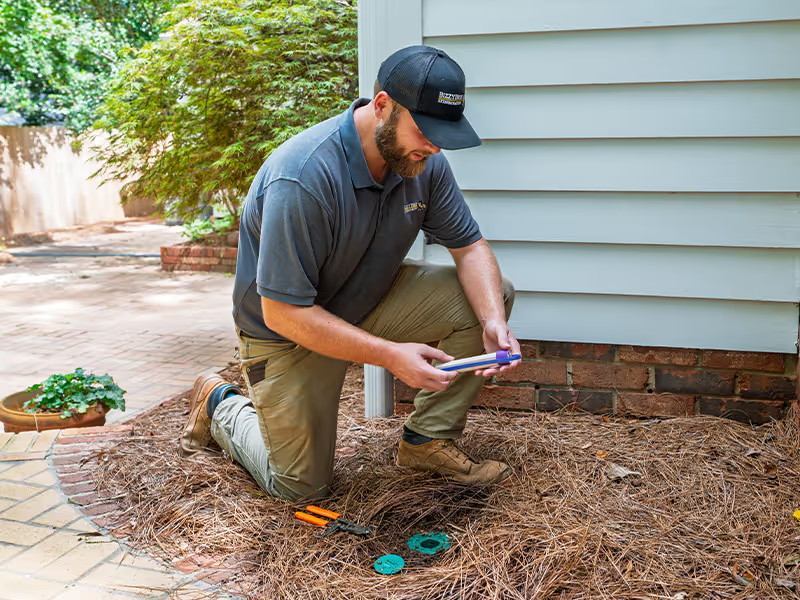
- Professional Inspections: Identifying the type of rodent, entry points, and any conditions that make your property inviting to rodents or other pests.
- Customized Treatment Plans: Targeted solutions based on the rodents present and the unique layout of your home or business.
- Integrated Pest Management (IPM): A comprehensive approach that combines inspections, monitoring, targeted treatments, and ongoing strategies to control rodents while minimizing risks to people, pets, and the environment.
- Ongoing Protection: Options to help keep rodents from returning, whether in a residence, office, or commercial facility.
With decades of experience serving property owners in Metro Atlanta, including Acworth and Oxford, Bizzy Bee is a trusted partner in rodent control. Request a free quote today and take the first step in protecting your property from mice, Norway rats, and roof rats.
Common Rodent Questions in Georgia
Are DIY traps and repellents enough to get rid of rodents?
While traps and ultrasonic devices may help in small areas, they rarely eliminate infestations. Professional inspections and targeted treatment plans are the most reliable solution.
Are rats smart enough to avoid traps?
Yes. Rats are cautious and intelligent, often avoiding new objects in their environment. They may sniff or inspect traps for days before approaching—or avoid them entirely if the bait isn’t appealing or the trap isn’t placed along their usual paths.
How many mice are there if I see one?
Seeing a single mouse usually means there are more nearby. Mice are social and breed quickly—just a pair can produce a dozen or more offspring in a few weeks. If you spot one, it’s a good sign to inspect your home or business and take action before the population grows.
Do mice and rats get inside cars?
Yes. Mice and rats can squeeze into small openings around engines, wheel wells, vents, or even through gaps in doors. Once inside, they may chew on wiring, insulation, or hoses, causing costly damage. Parking in garages and keeping vehicles clean can help reduce the risk.