
It All Starts With a Mating Flight
Most new fire ant colonies begin during a mating flight.
When a mature colony is ready to expand, it produces winged reproductive ants called alates. These include males and future queens. On warm, humid days — especially after rain — they leave the mound and swarm into the air to mate.
If you have ever seen large numbers of winged ants suddenly flying above a lawn or sidewalk after a storm, there is a good chance you were watching a fire ant mating flight.
Across North Georgia and Upstate South Carolina, these flights are especially common during warmer months when the soil is damp and temperatures stay high.
After mating, the males die. The fertilized queen lands, removes her wings, and searches for a place to start digging. She only needs a small patch of exposed soil to begin building a colony. That might be:
- a lawn
- a flower bed
- the edge of a driveway
- a sidewalk crack
- or bare soil near landscaping
This is one reason fire ant mounds seem to appear out of nowhere. A queen can land almost anywhere and begin establishing a colony immediately.
Already seeing fire ant mounds around your property? Bizzy Bee Exterminators can help. Contact us for a free evaluation.
The Queen Builds a Colony From Scratch
Once the queen finds a suitable spot, she digs a small chamber underground and seals herself inside. Then she begins laying eggs.
At first, she survives entirely on stored energy from her own body. Nutrients from her unused wing muscles help sustain her while she raises the colony’s first generation of workers.
After about a month, the first worker ants emerge.
These early workers are small, but they immediately begin caring for the queen, feeding larvae, and searching for food outside the nest. Once workers take over colony duties, the queen can focus completely on producing eggs — and colony growth accelerates quickly.
The Four Stages of the Fire Ant Life Cycle
Every fire ant in a colony goes through four life stages before becoming an adult ant.
Egg
Fire ant eggs are tiny, white, and oval-shaped. A healthy queen can lay hundreds of eggs every day. Under warm conditions, the eggs typically hatch within a week to ten days.
Larva
Fire ant larvae look like tiny white grubs. Worker ants constantly feed and care for them. The amount of food a larva receives helps determine its role in the colony, including whether it develops into a worker or a future queen.
Pupa
During the pupal stage, the ant transforms into its adult form underground. This stage usually lasts one to two weeks before the adult ant emerges.
Adult
Newly emerged adult ants are soft and pale at first, but they quickly darken and harden. Worker ants immediately begin expanding tunnels, gathering food, caring for larvae, and defending the colony. Queens can survive for years underground while continuously laying eggs.
Under favorable conditions, the entire process from egg to adult takes roughly one month. That fast development cycle is one reason fire ant populations grow so aggressively once colonies become established.
How Colonies Grow So Quickly
In the early months, a fire ant colony stays relatively small and mostly hidden underground. Many homeowners do not realize a colony is present until visible mounds begin appearing across the yard.
But below the surface, the queen is producing eggs constantly.
As more workers hatch, the colony expands faster and faster. Within six months to a year, colonies may contain tens of thousands of ants. Mature colonies can eventually grow to between 100,000 and 500,000 workers.
In many yards, homeowners do not realize a colony is present until they suddenly see multiple mounds after a stretch of warm, wet weather. We commonly get calls after heavy summer rainstorms when fire ant activity becomes much more visible across lawns and landscaped areas.
The visible mound is only a small portion of the colony. Beneath it is an extensive tunnel network that may extend several feet underground and spread well beyond the mound itself.
Workers constantly move eggs and larvae throughout the tunnel system to regulate moisture and temperature. During cooler weather, they may move closer to the surface. During hotter conditions, they retreat deeper underground.
North Georgia soil and the warm, humid climate across Metro Atlanta and Upstate South Carolina create ideal conditions for fire ants. After heavy rain, we often see new mounds appear within days in lawns, along driveways, near HVAC pads, and around landscaping beds.
How Fire Ant Colonies Spread
One colony rarely stays isolated for long. Fire ants spread in several different ways, which is why one mound often turns into many.
Mating Flights
Once colonies mature, they begin producing winged males and queens that leave during mating flights. Fertilized queens can travel miles before landing and starting new colonies.
A single mature colony may release thousands of winged ants during one flight event.
Budding
Some fire ant colonies contain multiple queens. Experts call these polygyne colonies.
When these colonies become crowded or disturbed, one queen may leave with a group of worker ants to establish a new colony nearby. This process is called budding.
Budding is one reason clusters of fire ant mounds sometimes appear in the same section of a yard.
Rafting During Flooding
Fire ants are remarkably adaptable during flooding events.
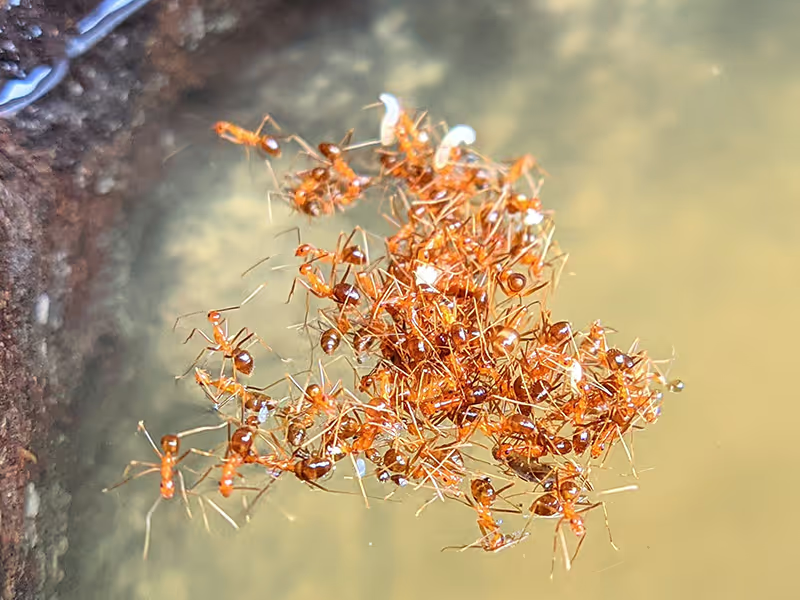
When heavy rain floods a nest, worker ants link together to form a floating raft that protects the queen and developing brood in the center. These rafts can survive for days before reaching dry ground and rebuilding.
In parts of North Georgia and Upstate South Carolina that experience heavy seasonal rain, this is one way fire ants spread into previously unaffected areas.
If you are seeing new fire ant mounds spreading across your property, it is best to address them before colonies continue expanding. Bizzy Bee Exterminators can inspect the property and recommend the right treatment approach.
What This Means for Your Yard
Here is what all of this means for homeowners: the visible mound is only a small part of the colony.
Most of the ants, tunnels, brood chambers, and the queen remain protected underground. That is why fire ant problems often return quickly when only the surface mound is disturbed.
As long as the queen survives, the colony can continue producing new ants and rebuilding.
This is also why disturbing some multi-queen colonies can actually make the problem worse. Instead of eliminating the colony, the queens may split apart and establish additional mounds nearby.
Effective fire ant control targets the entire colony, including the queen deep underground.
At Bizzy Bee Exterminators, we use professional fire ant treatments to penetrate the colony structure and eliminate the source of the infestation while remaining safe for families, pets, and treated landscapes.
Why Ongoing Protection Matters
Even after one colony is eliminated, new queens from neighboring properties can still land and begin building fresh colonies.
That is simply the nature of fire ants in the Southeast. They are constantly expanding into new areas.
Ongoing fire ant protection helps reduce the chances of newly landed queens establishing colonies in your yard. Regular monitoring and professional treatments can help keep fire ant populations under control throughout the warmer months.
Many homeowners throughout Metro Atlanta, North Georgia, and Upstate South Carolina choose an ongoing pest control plan from Bizzy Bee because preventing colonies is often far easier than dealing with large, established infestations later.
FAQs About Fire Ants
Are fire ants dangerous to pets and children?
Fire ants are aggressive when disturbed and can sting multiple times quickly. Children, pets, and anyone working in the yard are most at risk because colonies are often hidden until accidentally disturbed.
Why do fire ants build mounds after rain?
Rain softens the soil and pushes underground tunnels closer to the surface. After storms, fire ants often rebuild and expand their mounds, which is why many homeowners suddenly notice increased activity after wet weather.
Where are fire ant colonies commonly found around homes?
Fire ants usually prefer open, sunny areas with loose or moist soil. Colonies are commonly found in lawns, landscape beds, near sidewalks, around utility boxes, along driveways, and near foundations.
Can fire ants damage lawns or landscaping?
Large colonies can create uneven soil, damage root systems in some plants, and interfere with mowing or landscaping work. Mounds may also appear around irrigation systems, electrical boxes, and outdoor equipment.
Why do fire ant problems seem worse in new neighborhoods?
Construction and soil disturbance create ideal nesting conditions for fire ants. New developments often have exposed soil, minimal shade, and changing drainage patterns, all of which can encourage colony growth.
When is fire ant activity usually the highest?
Fire ants stay active much of the year in the Southeast, but mound activity often increases during warm, humid periods in spring, summer, and early fall — especially after rainfall.
Get Help With Fire Ants Before Colonies Spread
Fire ants are aggressive, fast-growing, and difficult to eliminate once colonies become established underground.
Bizzy Bee Exterminators has been helping homeowners across Metro Atlanta, North Georgia, and Upstate South Carolina protect their properties from fire ants since 1972. Our team understands how colonies behave locally, where they commonly spread, and how to target the queen to stop the cycle at its source.
If you are seeing new mounds appear around your yard, now is the best time to act before colonies continue expanding.
Contact Bizzy Bee Exterminators today for a free fire ant evaluation.